When Should You Replace Your Door? Signs It's Time for an Upgrade
Your door helps to protect your property, so it needs to open and close reliably, keep out the weather and provide an effective barrier against unwanted entry.
However, external doors do not last forever. Everyday use, weather exposure, accidental damage and general wear and tear can all affect their performance over time. The challenge is knowing whether a problem can be solved with a simple repair or whether it is a sign that you should replace your door altogether.
Understanding When to Replace a Door
So, when should you replace your door? Here are some of the key warning signs to look out for.
1. Your Door Has Sustained Structural Damage
Minor scratches, dents or worn hardware do not necessarily mean that you need a new door. However, more serious structural damage is a different matter.
Cracks, significant dents, warping, splitting or damage to the door leaf can affect the overall strength of the door. This is especially important for an external security door, which needs to provide a strong barrier between your property and the outside.
If the damage affects the structure, not just the appearance, repairing individual components may not restore the door to its original level of performance. In these circumstances, replacing the door can be a more sensible long-term solution.
2. Your Door No Longer Provides the Level of Security You Need
Security requirements can change over time, which means a door that was suitable when it was installed may no longer provide the level of protection your property needs.
Modern steel security doors can incorporate features designed specifically to make forced entry more difficult. Our doors are available with 9–12 point locking systems, anti-jemmy hinge bolts and an anti-jemmy lip around the frame.
If your existing door is the weakest point in your property's security, replacing it could make a significant difference.
3. The Door Is Constantly Sticking or Misaligned
Does your door scrape against the frame? Does it become difficult to close during certain times of the year? Or do you need to lift or push it to get the lock to engage? Occasional alignment problems can sometimes be corrected by adjusting the hinges or hardware. However, persistent problems could indicate that the door or frame has moved, warped or deteriorated.
A door that does not close correctly can prevent locks from engaging properly and leave gaps around the frame, potentially compromising security and weather resistance. If repeated adjustments are failing to solve the problem, replacement may be worth considering.
4. You Can See Rust, Rot or Significant Deterioration
External doors are exposed to the elements every day, so deterioration can eventually become unavoidable.
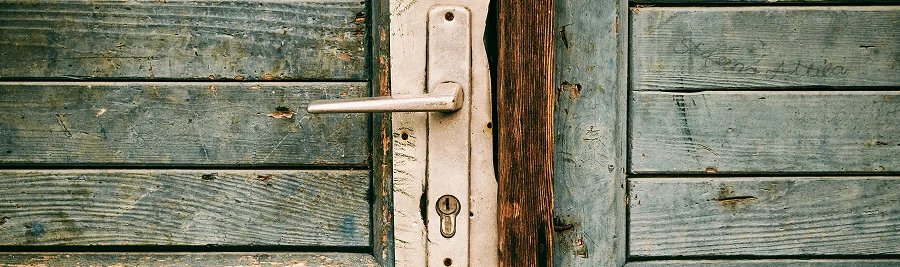
With timber doors, look for signs such as rot, soft areas, splitting and water damage. Metal doors and their components should be checked for significant rust, corrosion or deterioration.
Surface-level damage may be treatable, but widespread deterioration can eventually compromise the door's strength and functionality.
If the material itself is beginning to fail, continually repairing individual areas only postpones the inevitable. Replacing the door allows you to address the underlying problem rather than repeatedly treating its symptoms.
5. There Are Noticeable Gaps Around the Door
A properly fitted external door should provide a good seal around the opening. If you can see daylight around the edges, feel draughts or notice water entering around the frame, your door may no longer be performing as it should.
There can be several reasons for this, including worn seals, movement within the frame or a warped door leaf.
Before replacing the entire door, it is worth establishing whether the problem can be resolved by replacing seals or adjusting the hardware. If the door itself has deteriorated or no longer fits the opening correctly, however, a replacement may provide a more reliable solution.
Our steel doors feature a full weather seal around the frame, helping to create a more effective barrier between the interior and exterior of the property.
6. You Are Spending More and More on Repairs
One repair does not necessarily mean it is time for a new door. But if you are repeatedly paying for replacement hinges, locks, handles, adjustments or other repairs, it may be time to consider the bigger picture.
Add up what you have spent maintaining the door over the past few years and consider whether rfurther repairs are likely to solve the problem permanently.
Sometimes, the cheapest option today is not necessarily the most cost-effective option over the next few years. A new, durable door can remove the need for repeated repairs while giving you the opportunity to improve security and functionality at the same time.
7. Your Property's Requirements Have Changed
Your door may not be failing; it may just not be suitable for what you now need.
If a residential door is now being used for higher-traffic commercial premises, or maybe you need improved ventilation, better access control or additional security, then your property may require a different type of door.
This is where replacing rather than repairing can make sense. Instead of trying to adapt an unsuitable door, you can choose a solution designed around the property's current requirements.
Steel security doors are available in different configurations, including standard and heavy-duty options, as well as panelled and louvred designs.
Repair or Replace? Try This Quick Door Health Check
Still not sure whether your door needs replacing? Use the questions below as a simple starting point:
- Is the damage only cosmetic? If yes, a repair may be sufficient.
- Is the door structurally sound? If yes, there may be no reason to replace it yet.
- Does the door close, latch and lock properly every time? If not, investigate the cause rather than repeatedly adjusting it.
- Is the frame secure and free from significant damage? A damaged frame can affect the performance of the entire door.
- Does the door provide the level of security your property currently needs? If your security requirements have increased, an upgrade could be worthwhile.
- Are you repeatedly paying for repairs? If maintenance is becoming a regular expense, compare the long-term cost with replacement.
If you answer 'no' to several of these questions, it could be time to start looking at replacement options.
Why Replace Your Door with Steel?
If security is a priority, replacing an ageing door with a purpose-built steel security door can provide an opportunity to upgrade more than just its appearance.
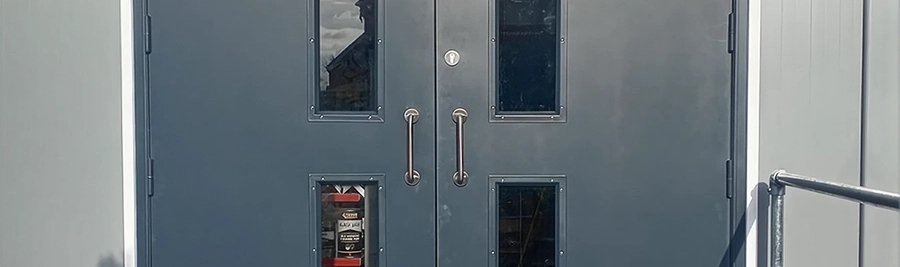
Our steel doors feature a thick door leaf with steel strengthening and fibre glass or mineral wool filling, alongside heavy-duty hinges and multi-point locking. Options can also include door closers, vision windows, louvred panels, powder coating and digital locking mechanisms.
This means a replacement can be tailored around how your property is actually used, as opposed to simply replicating the door you already have.
Is It Time to Replace Your Door?
There is no single age at which every door needs replacing. The more useful question is whether your existing door is still doing its job.
If it is structurally sound, closes correctly, provides adequate security and only needs occasional minor maintenance, repairing it may make sense. But if you are dealing with persistent faults, significant deterioration, compromised security or increasingly frequent repairs, replacement could be the better long-term investment.
A new door is also an opportunity to reassess what you need from your entrance. If your current door is no longer meeting the demands of your property, browse our range of steel security doors to find a solution designed for long-lasting protection.